
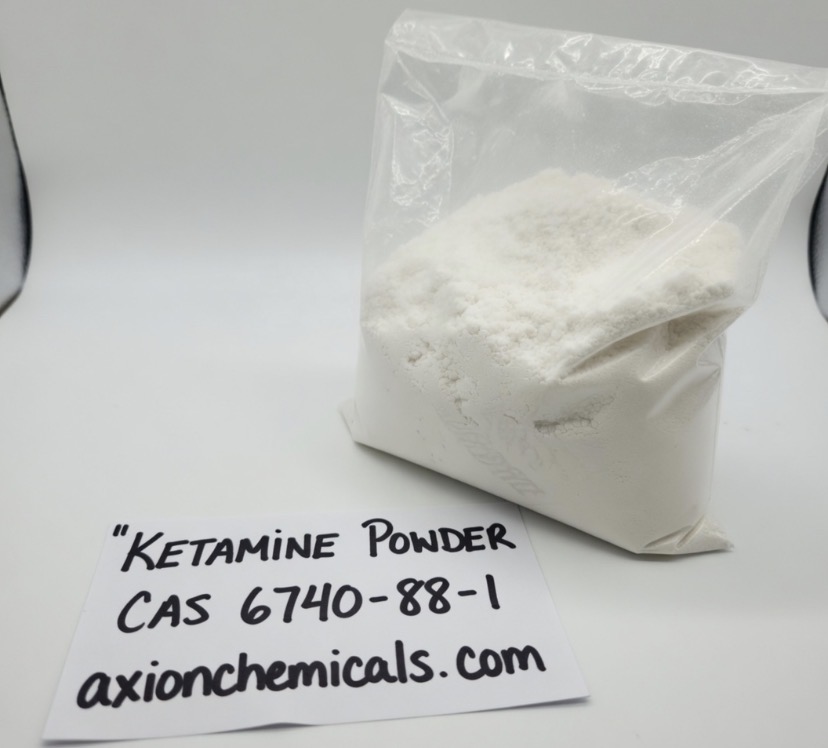
Buy Ketamine Powder Online
Price range: $330.00 through $1,195.00
Our Ketamine Powder is pharmaceutical-grade Ketamine Hydrochloride (HCL), manufactured and lab-tested to meet the highest standards of purity and potency. Suitable for therapeutic, and scientific research purposes, this dissociative anesthetic offers fast-acting relief for pain management, treatment-resistant depression, PTSD, and more.
Description
Buy ketamine powder online- High purity ketamine powder for sale at Axion Chemicals
Researchers and medical professionals looking to buy ketamine powder online trust Axion Chemicals. We supply high purity ketamine powder for sale that researchers study as a unique dissociative anesthetic with important applications in medicine and ongoing scientific exploration. Scientists first developed this compound decades ago, and it continues to generate interest because of its effects on the brain and potential therapeutic benefits.
What Is Ketamine?
Ketamine powder is a medication that acts as a noncompetitive antagonist at NMDA (N-methyl-D-aspartate) receptors in the brain. Doctors and veterinarians primarily use it as an anesthetic. It produces a dissociative state where people feel detached from their body and surroundings while often maintaining breathing and cardiovascular function better than some other anesthetics.
The drug comes in different forms. Pharmaceutical ketamine usually appears as a clear liquid for injection. In some research or compounded settings, people convert it to a white or off-white powder, but researchers handle these forms only in controlled laboratory or clinical environments.
Ketamine exists as a racemic mixture (equal parts S- and R-enantiomers). Esketamine, the S-enantiomer, has higher potency and received specific FDA approval for certain depression treatments as a nasal spray.
History and Development of Ketamine
Scientists at Parke-Davis laboratories synthesized ketamine in the early 1960s as a safer alternative to phencyclidine (PCP). Calvin Stevens led the team that created it. Researchers tested it first on animals and then on humans. The U.S. Food and Drug Administration (FDA) approved ketamine for medical use in 1970.
During the Vietnam War, medical teams used ketamine extensively as a battlefield anesthetic because it works quickly and does not suppress blood pressure or breathing as much as other options. Veterinarians also adopted it widely for animal procedures. Today, ketamine remains a staple in both human and veterinary medicine.
Medical Uses of Ketamine
Doctors use ketamine in controlled clinical settings for several purposes:
- Anesthesia: Ketamine induces and maintains anesthesia for surgical procedures, especially in emergencies or when other anesthetics pose higher risks. It works well for short procedures and in patients with certain respiratory or cardiovascular concerns.
- Pain Management: Healthcare providers sometimes administer low-dose ketamine for chronic pain conditions such as neuropathic pain, fibromyalgia, and complex regional pain syndrome (CRPS). It helps reduce pain signals through its action on glutamate pathways.
- Mental Health Research: Researchers actively study ketamine for treatment-resistant depression, PTSD, anxiety, and suicidal thoughts. Low doses can produce rapid improvements in mood for some patients, often within hours or days, unlike traditional antidepressants that take weeks.
You must note that standard ketamine injection is FDA-approved only as an anesthetic. Its use for psychiatric conditions is off-label except for esketamine nasal spray (Spravato), which has specific approval for treatment-resistant depression and depression with suicidal ideation.
How Ketamine Works: Mechanism of Action
Ketamine blocks NMDA receptors on certain neurons. This blockade leads to a temporary surge in glutamate, the brain’s main excitatory neurotransmitter. The glutamate then activates AMPA receptors, triggering a cascade that increases brain-derived neurotrophic factor (BDNF) and activates the mTOR pathway. These steps promote synaptogenesis — the growth of new connections between neurons.
This neuroplasticity effect likely explains why ketamine can rapidly improve mood in some people with depression. It may help “reset” brain circuits affected by chronic stress or trauma. Researchers continue to study these mechanisms to develop better treatments.
Ketamine also interacts with opioid receptors and other systems, which contributes to its pain-relieving and dissociative properties.
Effects of Ketamine
Low Doses (Sub-anesthetic): People often report improved mood, reduced pain, and mild dissociation. In research settings for depression, patients may feel calmer and notice fewer negative thoughts quickly.
Higher Doses (Anesthetic): Ketamine produces a full dissociative state. Patients may experience vivid dreams, hallucinations, or a sense of detachment. These effects usually fade as the drug wears off.
Common short-term effects include:
- Elevated heart rate and blood pressure
- Increased saliva production
- Nausea or vomiting (especially during emergence)
- Dizziness or blurred vision
Researchers monitor these effects closely in studies.
Potential Risks and Side Effects
Ketamine carries risks like all medications. Common side effects include dissociation, confusion, and elevated blood pressure. In rare cases, people experience severe emergence reactions with agitation or hallucinations.
Longer-term concerns from repeated or high-dose use include:
- Bladder problems (cystitis)
- Cognitive or memory issues with heavy recreational exposure
- Potential for dependence or misuse
Researchers emphasize careful patient selection and monitoring. People with uncontrolled high blood pressure, certain heart conditions, or a history of psychosis may face higher risks.

Ketamine in Research for Mental Health
Scientists have published many studies on ketamine for treatment-resistant depression and PTSD. Some patients experience rapid relief from suicidal thoughts, which makes it a promising area for further research.
Ongoing work explores optimal dosing, frequency, and combination with therapy. Results vary between individuals, and researchers stress the need for more large-scale, long-term studies. Ketamine is not a cure-all and works best as part of a comprehensive treatment plan.
Storage Guidelines for Ketamine in Research Settings
Proper storage keeps ketamine stable and safe for legitimate research or medical use.
You store ketamine hydrochloride injection at controlled room temperature, typically 20°C to 25°C (68°F to 77°F). Protect it from light and keep it in its original packaging or airtight containers.
For powder forms used in laboratory research:
- Keep the substance in a cool, dry place.
- Use tightly sealed, desiccated containers to prevent moisture absorption.
- Store away from direct sunlight and heat sources.
- Follow all institutional and regulatory requirements for controlled substances.
Research facilities must maintain detailed inventory logs, secure storage in locked areas, and restrict access to authorized personnel only. Always check specific product labels and institutional protocols.
Handling Guidelines for Ketamine in Licensed Facilities
Trained professionals handle ketamine with strict protocols:
- Wear appropriate personal protective equipment (gloves, lab coat, eye protection) when preparing solutions.
- Use calibrated equipment for accurate dosing.
- Follow sterile techniques for injectable preparations.
- Dispose of unused portions and waste according to hazardous waste or controlled substance regulations.
- Document every use, transfer, and disposal as required by law.
Institutions that conduct ketamine research must comply with DEA regulations for Schedule III controlled substances, including proper registration, security, and record-keeping.
Dosage Considerations in Research and Medicine
Dosage varies greatly depending on the goal:
- Anesthesia: Higher doses (1–4.5 mg/kg IV for induction in adults).
- Pain or depression research: Much lower sub-anesthetic doses (often 0.5 mg/kg IV infused over 40 minutes).
Researchers adjust doses based on body weight, patient response, and study protocol. They always administer ketamine under medical supervision with monitoring equipment available.
Never attempt to determine or use dosages outside of approved clinical trials or licensed medical care.
Forms of Ketamine Used in Studies
Researchers work with injectable solutions most often. Some studies explore nasal, oral, or sublingual forms for convenience, though these have different absorption rates and bioavailability. Intravenous administration provides the most precise control in research settings.
Legal Status and Regulations
In the United States, ketamine is a Schedule III controlled substance. This classification indicates accepted medical use with moderate potential for dependence. Researchers and clinicians must follow strict federal and state rules.
The FDA has not approved ketamine itself for psychiatric disorders except in specific forms like esketamine. All other psychiatric uses remain off-label and require careful ethical and legal consideration.
Laws differ by country. Always consult current regulations in your jurisdiction before any research activity.
Why Ketamine Research Matters
Ketamine offers a different approach to brain chemistry compared to traditional antidepressants. Its ability to promote rapid neuroplasticity opens new doors for understanding and treating mood disorders. Scientists continue to investigate how to maximize benefits while minimizing risks.
Best Practices for Responsible Research
- Work only within approved institutional review board (IRB) protocols.
- Collaborate with experienced clinicians and researchers.
- Prioritize participant safety and informed consent.
- Publish transparent results to advance scientific knowledge.
- Stay updated through peer-reviewed journals and official health authorities.
Important Disclaimer This article provides general educational information based on publicly available scientific and medical sources. It is not medical advice, treatment guidance, or encouragement to obtain or use ketamine outside of legally authorized channels. Ketamine is a controlled substance. Unauthorized possession, distribution, or use is illegal and dangerous. Consult qualified healthcare professionals and regulatory authorities for any specific applications. Research and medical use must occur only in licensed facilities with proper approvals. Individual responses to ketamine vary, and it carries risks. Always prioritize safety, ethics, and legal compliance.
Other Products
Additional information
| Quantity | 1/2 ounce, 1 ounce, 5 grams |
|---|
Related products
-
Buy Ketamine Crystals Online
Axion Chemicals offers ketamine crystals that are carefully tested in a lab to ensure purity and quality. You can order them online with confidence. We offer fast and discreet shipping worldwide Price range: $245.00 through $4,565.00 -
Buy Ketamine Nasal Spray Online
Axion Chemicals provides genuine Ketamine Nasal Spray for sale, verified by clinicians to ensure proper absorption and safety. You can buy esketamine online with ease—it is made for fast-acting mood stabilization and comes with REMS compliance, virtual consultations, and quick pharmacy delivery to support meaningful mental health care. Price range: $250.00 through $899.00 -
Buy Ketamine Pills Online
Axion Chemicals supplies ketamine tablets for sale, made from ketamine hydrochloride and crafted to meet official pharmacopeial standards with a sustained-release formula. You can purchase these ketamine pills safely—they are designed to be taken sublingually or orally. Each order is packed safely and shipped discreetly worldwide. Price range: $300.00 through $550.00 -


Reviews
There are no reviews yet.